|
|
 |
 |
|
Conventional Starter
|
Other Constructions of Starter
|
|
|
|
Conventional type
|
| 1. |
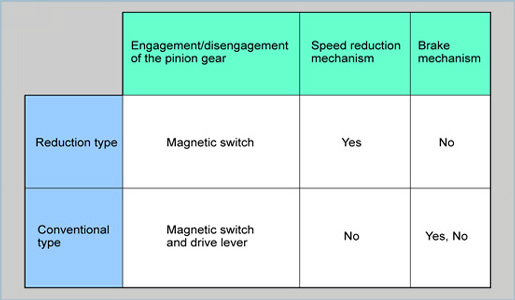
Construction differences between the conventional type and the reduction type (figure on the left)
|
|
| 2. |
Engagement/disengagement of the pinion gear
|
| (1) |
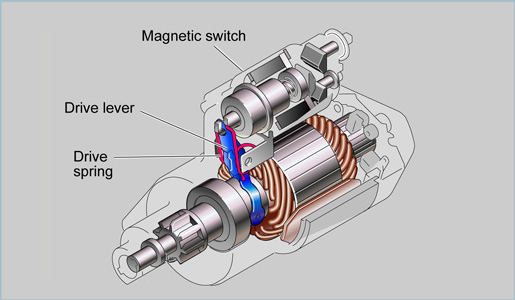
Magnetic switch
|
| The construction of the magnetic switch of a conventional type starter is basically the same as that of the reduction type starter. However, the conventional type pulls the plunger to engage and disengage the pinion gear, whereas the reduction type pushes the plunger. |
| (2) |
Drive lever
|
| The drive lever transmits the movement of the magnetic switch to the pinion gear. The pinion gear is engaged with, and disengaged from, the ring gear by this movement. |
| (3) |
Drive spring
|
| The drive spring is built into the drive lever or into the magnetic switch. The drive spring of a conventional type starter operates in the same way as the return spring of a reduction type starter. |
|
| 3. |
Reduction mechanism
|
| Since conventional type starter can obtain enough torque to start the engine by the larger armature, the ratio reduction mechanism is not necessary. Consequently, the armature is connected directly to the pinion gear. |
|
(22)
|
|